After a stroke or neurologic injury, learning how to stay safe is essential. Preventing falls protects your recovery, especially during the early stages when the brain is adapting and relearning movement.
But for many people, caution slowly turns into something else: avoiding movement altogether.
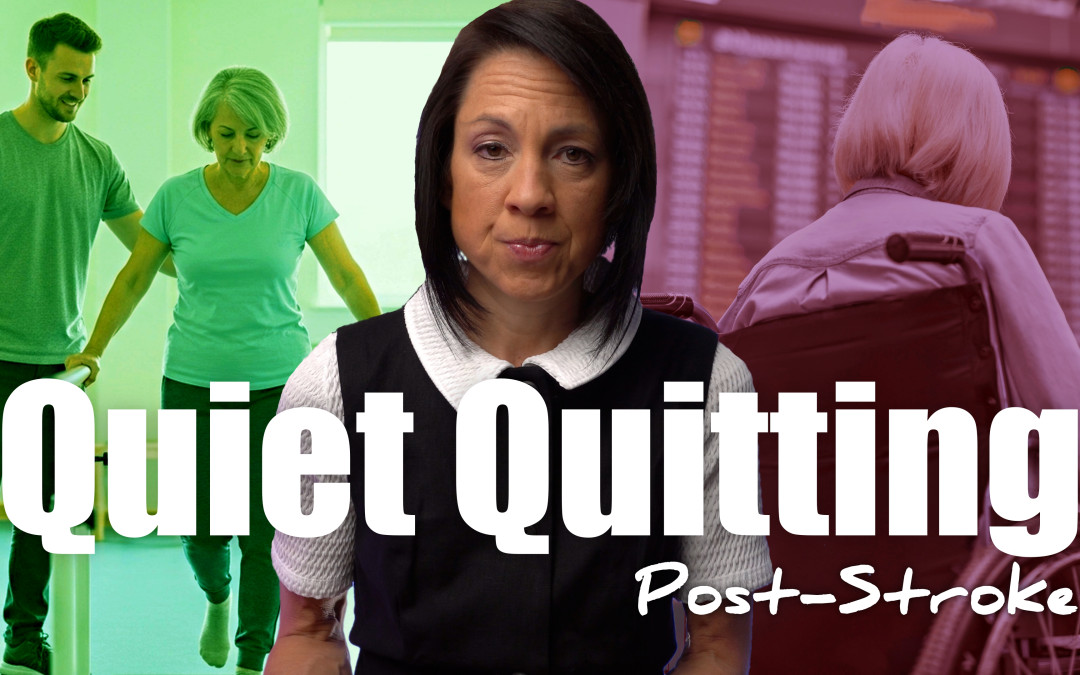
You may begin sitting more often, relying heavily on the wheelchair, or avoiding certain activities simply because they feel difficult or mentally exhausting. While these choices can feel safer in the moment, they may also reduce the opportunities your brain needs to improve walking, balance, and confidence.
The Hidden Impact of Avoiding Movement
Most people recovering from a neurologic injury become highly aware of their limitations.
You may notice:
- Your foot catches the floor
- Your leg feels weak or unstable
- Walking requires intense concentration
- Certain surfaces or rooms feel more difficult
Because of this, the brain naturally looks for easier options.
Instead of walking to another room, you may stay seated. Instead of practicing standing, you may avoid it unless necessary. Over time, those decisions can reduce activity levels and limit recovery progress.
The challenge is that the nervous system improves through experience.
Walking, balancing, shifting weight, and navigating different environments all provide important input that helps the brain adapt. When those experiences decrease, mobility often becomes more limited rather than more secure.
Why Safe Challenges Matter for Neuroplasticity
Recovery after stroke is heavily influenced by neuroplasticity — the brain’s ability to reorganize and form new movement patterns.
The brain learns best through:
- Repetition
- Problem-solving
- Balance practice
- Exposure to new movement experiences
This does not mean taking unnecessary risks. It means finding ways to safely challenge your current abilities instead of avoiding them entirely.
For example:
- Practicing standing near a sturdy surface
- Walking short distances with an assistive device
- Navigating a room you normally avoid
- Performing balance activities with a wall behind you for support
These small experiences teach the nervous system how to react, adapt, and improve confidence over time.
Fear of Falling Is Real — But Confidence Comes From Practice
After a fall or near-fall, many people become afraid of:
- Losing balance while alone
- Getting injured
- Needing emergency assistance
- Losing independence
Those concerns are understandable. However, confidence usually does not return through rest alone.
Confidence develops through repeated successful experiences.
When movement is practiced consistently within a safe challenge zone, the brain gradually becomes more efficient at handling balance, coordination, and walking tasks.
This is often how people begin rebuilding independence after neurologic injury.
Signs You May Be Holding Yourself Back
You may have shifted from healthy caution into avoidant behavior if:
- You sit most of the day even when walking is possible
- You avoid parts of your home
- You rely on the wheelchair primarily for convenience
- You no longer challenge your balance
- Your daily activity level keeps shrinking
Recognizing these patterns is important because recovery often depends on gradually expanding activity rather than reducing it.
How to Start Challenging Yourself Safely
If you have good awareness of your limitations, consider introducing small daily challenges that still prioritize safety.
Helpful strategies may include:
- Using assistive devices consistently
- Practicing near stable furniture or countertops
- Walking in controlled environments
- Breaking activities into shorter practice sessions
- Repeating tasks daily rather than occasionally
The goal is not to remove all fear. The goal is to keep fear from completely controlling your movement decisions.
Recovery Requires Movement Experiences
The nervous system adapts through doing.
Every time you safely practice standing, balancing, walking, or navigating your environment, your brain receives information that supports recovery.
Even small amounts of consistent practice can help improve:
- Walking confidence
- Balance reactions
- Endurance
- Coordination
- Independence
Progress after neurologic injury is rarely about pushing harder. More often, it comes from giving the brain regular opportunities to learn.
If you’re looking for more in-depth guidance, exercises, walking recovery strategies, and neurologic rehab education, explore the Rehab HQ Memberships to access additional recovery resources designed specifically for neurologic rehabilitation.
Articles you may be interested in
Does Stroke Recovery Ever End? How to Improve Walking Years After a Stroke
https://www.youtube.com/watch?v=EkgoxFfroX4 If you have had a stroke, you may wonder how long recovery will take. Will you walk normally again? Is it still worth doing exercises years after your stroke? And how do you know when you have reached your full...

Why Pain and Nutrition Matter for Spasticity After Stroke
https://www.youtube.com/watch?v=_EdQGkOx4kw Have you ever woken up one morning feeling like your affected leg is moving a little more easily, only to find that the next day your ankle feels stiff, your foot wants to point downward, or your arm feels tighter...

Why Is Spasticity Worse Some Days? 3 Factors That Can Affect Spasticity After Stroke
https://www.youtube.com/watch?v=iBcU4c8kiqc If you live with spasticity after a stroke or other neurologic injury, you may have noticed something frustrating: Some days your muscles feel relatively loose and manageable. Other days, they seem much tighter. Your...

Spasticity Treatment After Stroke: Why Stretching Alone Isn’t Enough
https://www.youtube.com/watch?v=Vw8Y55f-sLY If you experience muscle stiffness, involuntary contractions, or difficulty moving your arm or leg after a stroke or neurologic injury, you've probably been told to stretch. But what if stretching alone isn't enough?...

Spasticity After Stroke: Why Your Muscles Feel Stiff
https://www.youtube.com/watch?v=mvDk3dMmc6E Muscle stiffness is one of the most common movement problems after a stroke or neurologic injury. Your arm may want to stay bent, your knee may feel stiff when walking, or your ankle and foot may constantly point...

Red Light Therapy After Stroke: Can It Help Support Brain Recovery?
https://www.youtube.com/watch?v=BFJzu1f2jEE Recovering after a stroke involves more than rebuilding strength or practicing movements. The brain itself is going through changes that can affect energy production, inflammation, blood flow, and its ability to form...

How to Improve Backward Stepping After a Stroke or Neurologic Injury
https://www.youtube.com/watch?v=FdYMY6Xj1fM Walking forward gets most of the attention in neurologic rehabilitation. But there is another movement that can have a major impact on your balance, confidence, and independence: Stepping backward. Think about how...

Stroke Recovery Treatments: How to Tell What May Actually Help
https://www.youtube.com/watch?v=nZWj2vVtDfw After a stroke or neurologic injury, it’s natural to look for anything that might improve recovery. Supplements. Devices. Electrical stimulation. New procedures. Hyperbaric oxygen therapy. Products promising to...

Finished Physical Therapy But Still Struggling to Walk? What to Do Next After Neurologic Injury
https://www.youtube.com/watch?v=WDf-dB2imTc Have you been told that you've met all of your physical therapy goals, but you still don't feel like you're moving normally? Maybe you can walk independently, but your walking still feels awkward or exhausting. Maybe...

Dead Leg After Stroke: Why Your Leg Won’t Move and How to Wake It Up
https://www.youtube.com/watch?v=cw7PIULok74 If your leg feels completely “dead” after a stroke—like you can think about moving it, try to move it, and nothing happens—you may be dealing with more than simple weakness. For some stroke survivors, the affected leg...


