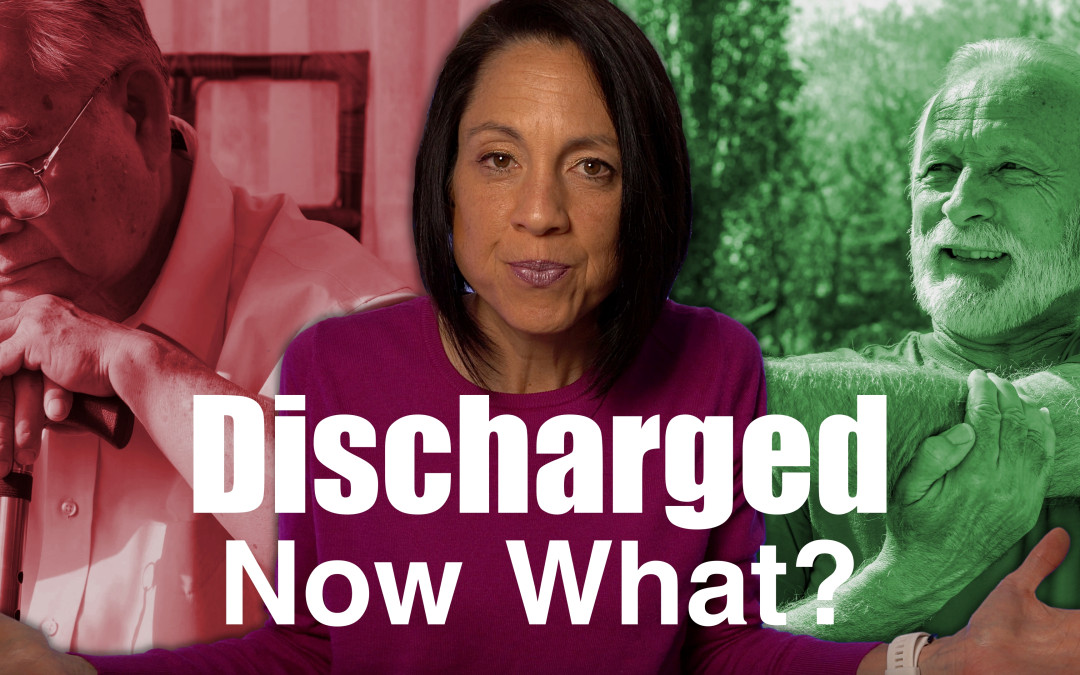
Have you been told that you’ve met all of your physical therapy goals, but you still don’t feel like you’re moving normally?
Maybe you can walk independently, but your walking still feels awkward or exhausting. Maybe you have foot drop, ankle weakness, hip hiking, a stiff leg, or an uneven walking pattern. Or perhaps you find yourself relying heavily on a cane, wheelchair, or your stronger side to get through the day.
If this sounds familiar, you may be wondering:
“If I graduated from physical therapy, is this as good as my recovery is going to get?”
Not necessarily.
Being Discharged From Physical Therapy Doesn’t Mean You’ve Reached Your Full Potential
One of the biggest misconceptions in neurologic rehabilitation is that being discharged from therapy means you’ve reached your maximum potential.
But physical therapy and long-term movement recovery are not always measuring the same thing.
During rehabilitation, therapists often have to focus on functional goals such as safely transferring, standing, walking, navigating daily activities, and reducing fall risk. These are extremely important goals.
But there is another layer of recovery that can be easy to overlook:
How does the movement actually look and feel?
You may be able to walk across a room, for example, but still:
- Swing your leg out to the side
- Hike your hip to clear your foot
- Lift your knee excessively
- Drag or catch your toes
- Walk with a stiff leg
- Put excessive pressure through your cane
- Become fatigued after relatively short distances
- Feel that your movement is awkward or inefficient
Being able to perform a task does not necessarily mean you’ve finished improving the quality of that movement.
Why Your Walking May Still Look Different After Neurologic Injury
After a neurologic injury, your brain and body may develop compensatory movement patterns that help you accomplish a task.
For example, if your foot doesn’t lift well because of foot drop or ankle weakness, you may find another way to clear your foot from the ground. You might hike your hip, lift your knee higher, or swing your leg outward.
That compensation may have been incredibly useful earlier in your recovery.
But eventually, you may reach a point where you want to do more than simply complete the movement.
You want the movement to feel smoother, easier, more controlled, and more natural.
This is where becoming more curious about how you move can become important.
Look Beyond the Big Goal
A functional goal gives your rehabilitation direction.
Instead of simply saying:
“I want to walk better.”
Try asking:
“What would make me proud of my progress six months from now?”
Maybe it’s:
- Walking from the parking lot into your favorite restaurant without your wheelchair
- Going up a step without assistance
- Walking around your home while carrying a plate or cup
- Getting down on the floor to play with your grandchildren
- Using your affected arm to carry an object
- Releasing an object from your hand more easily
Once you identify the larger goal, you can start breaking it down.
What specific movement is preventing you from reaching that goal?
That is where the real work begins.
Use Your Stronger Side as Your Movement “Textbook”
One of the strategies discussed in the video is to become curious about the difference between your involved and uninvolved sides.
Watch yourself perform a movement with your stronger side.
Then compare it with your involved side.
What looks different?
Maybe your elbow moves away from your body when you reach.
Maybe your hip hikes when you take a step.
Maybe your knee stays straighter.
Maybe your ankle doesn’t move through the same range.
The goal isn’t simply to force your body into a particular position. Rather, the idea is to notice the movement, identify differences, and use that information to guide your practice.
This process of recognizing an error and working toward a correction is an important part of taking greater ownership of your rehabilitation.
Daily Repetition Matters
One of the most important pieces of continued progress is daily repetition.
Once you’ve identified the functional goal and the movement you want to improve, the next step is practice.
Not simply doing random exercises.
Instead, practice should have a purpose.
Think:
Big-picture goal → specific movement → targeted practice → functional practice
For someone dealing with foot drop or ankle weakness, for example, the larger goal might be walking independently through a restaurant. The next step is identifying what part of the walking pattern is making that difficult and then working on that movement.
This is different from simply asking, “What exercise should I do?”
Your Recovery Doesn’t Have to End When Therapy Ends
Physical therapy has an important role in neurologic recovery. But therapy eventually ends.
The goal isn’t to remain dependent on a therapist forever.
The goal is to learn how to become an active participant in your own recovery.
That means learning to:
- Identify movement problems
- Understand what you want to improve
- Break larger movements into smaller components
- Recognize differences between your stronger and affected sides
- Practice consistently
- Evaluate your progress
- Determine what you should work on next
The more you understand your own movement, the more equipped you can become to continue practicing outside of formal therapy.
Want Help Taking More Ownership of Your Neurologic Recovery?
Inside Rehab HQ, members learn how to break down movement, identify areas that need attention, prioritize goals, and build progressive practice around real-life movement problems.
You’ll also have access to a growing exercise library organized around common challenges following neurologic injury.
If you’re ready to become more involved in your own rehabilitation and want a structured way to continue working toward your goals, explore Rehab HQ membership and see whether it’s right for you.
Articles you may be interested in

Stroke Rehabilitation Exercises: Why Specificity Matters for Better Walking
https://www.youtube.com/watch?v=rCRXccCHwIk Why Aren’t My Rehabilitation Exercises Improving My Walking? You show up. You do your exercises. You follow your routine. Yet walking still feels difficult, your foot catches on the floor, or you struggle to move your...

Doing Rehab Exercises Every Day but Not Improving? Your Program May Need a Reset
https://www.youtube.com/watch?v=08fvaKO6EKo Have you been doing your rehabilitation exercises every day but feel like you're no longer making progress? You may have a long list of exercises, yet your walking, foot clearance, or everyday mobility doesn't seem to...
Does Stroke Recovery Ever End? How to Improve Walking Years After a Stroke
https://www.youtube.com/watch?v=EkgoxFfroX4 If you have had a stroke, you may wonder how long recovery will take. Will you walk normally again? Is it still worth doing exercises years after your stroke? And how do you know when you have reached your full...

Why Pain and Nutrition Matter for Spasticity After Stroke
https://www.youtube.com/watch?v=_EdQGkOx4kw Have you ever woken up one morning feeling like your affected leg is moving a little more easily, only to find that the next day your ankle feels stiff, your foot wants to point downward, or your arm feels tighter...

Why Is Spasticity Worse Some Days? 3 Factors That Can Affect Spasticity After Stroke
https://www.youtube.com/watch?v=iBcU4c8kiqc If you live with spasticity after a stroke or other neurologic injury, you may have noticed something frustrating: Some days your muscles feel relatively loose and manageable. Other days, they seem much tighter. Your...

Spasticity Treatment After Stroke: Why Stretching Alone Isn’t Enough
https://www.youtube.com/watch?v=Vw8Y55f-sLY If you experience muscle stiffness, involuntary contractions, or difficulty moving your arm or leg after a stroke or neurologic injury, you've probably been told to stretch. But what if stretching alone isn't enough?...

Spasticity After Stroke: Why Your Muscles Feel Stiff
https://www.youtube.com/watch?v=mvDk3dMmc6E Muscle stiffness is one of the most common movement problems after a stroke or neurologic injury. Your arm may want to stay bent, your knee may feel stiff when walking, or your ankle and foot may constantly point...

Red Light Therapy After Stroke: Can It Help Support Brain Recovery?
https://www.youtube.com/watch?v=BFJzu1f2jEE Recovering after a stroke involves more than rebuilding strength or practicing movements. The brain itself is going through changes that can affect energy production, inflammation, blood flow, and its ability to form...

How to Improve Backward Stepping After a Stroke or Neurologic Injury
https://www.youtube.com/watch?v=FdYMY6Xj1fM Walking forward gets most of the attention in neurologic rehabilitation. But there is another movement that can have a major impact on your balance, confidence, and independence: Stepping backward. Think about how...

Stroke Recovery Treatments: How to Tell What May Actually Help
https://www.youtube.com/watch?v=nZWj2vVtDfw After a stroke or neurologic injury, it’s natural to look for anything that might improve recovery. Supplements. Devices. Electrical stimulation. New procedures. Hyperbaric oxygen therapy. Products promising to...


