After a stroke or neurologic injury, it’s natural to look for anything that might improve recovery.
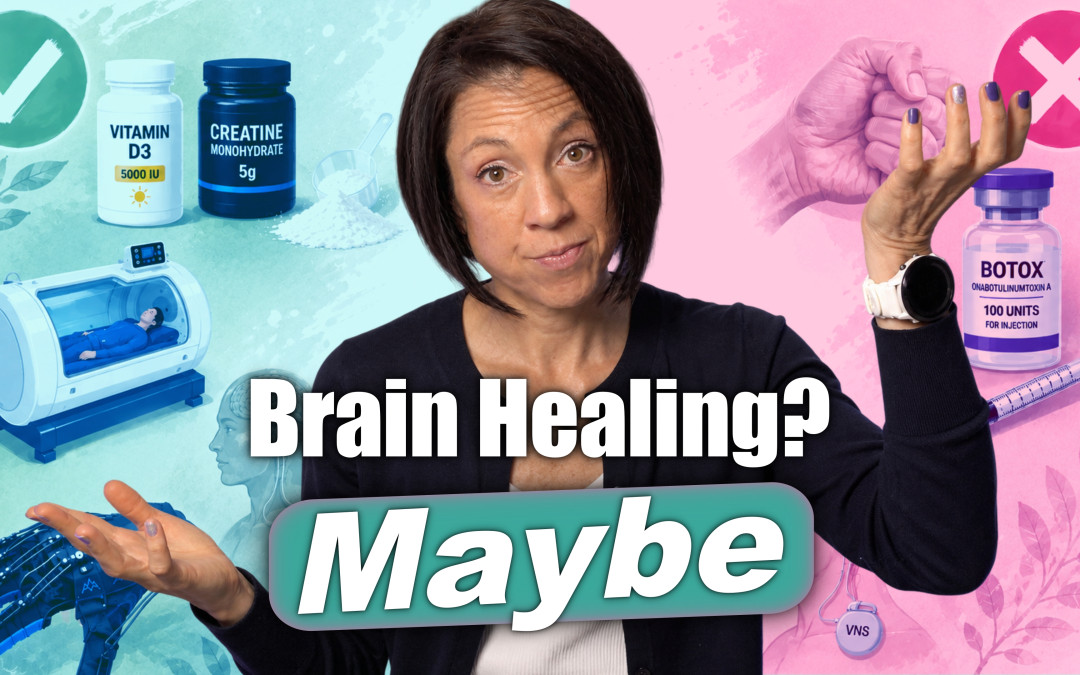
Supplements. Devices. Electrical stimulation. New procedures. Hyperbaric oxygen therapy. Products promising to improve neuroplasticity or help the brain “rewire.”
There are more options than ever—and that can make it difficult to know what deserves your time, money, and attention.
The more important question may not be:
“Does this stroke recovery treatment work?”
Instead, ask:
“Is there evidence that it could help someone like me—and does the potential benefit justify the cost, time, and risk?”
What Actually Supports Neuroplasticity After a Stroke?
After a stroke, rehabilitation focuses on helping the nervous system rebuild or reorganize neural networks so you can regain lost movement and function.
While certain treatments or tools may support that process, they cannot replace the foundations that help create an environment for recovery.
Before investing heavily in the latest stroke recovery treatment, pay attention to four important areas:
- Sleep: Quality sleep supports learning and brain function.
- Mental and emotional health: Chronic stress and emotional distress can influence processes in the body associated with inflammation.
- Nutrition: A nutrient-dense, whole-food diet provides your body and brain with the building blocks they need.
- Movement: Regular physical activity and movement practice remain essential.
Most importantly, recovering a movement requires practicing that movement.
A supplement or device may help support your rehabilitation, but it cannot perform the repetitions required to build a new movement pattern for you.
Are Stroke Recovery Supplements and Devices Worth It?
The answer is rarely a simple yes or no.
Some supplements may be useful when correcting a nutritional deficiency, and research continues to investigate whether certain supplements could provide additional benefits during stroke recovery.
Similarly, assistive devices, electrical stimulation, and other technologies may be helpful for the right person, at the right stage of recovery, for the right problem.
That last part matters.
Stroke affects every person differently. A product that helps one survivor may be inappropriate for another depending on factors such as:
- Time since the stroke
- Current voluntary movement
- Spasticity
- Strength and motor control
- Walking pattern
- Specific rehabilitation goals
This is why broad claims that a single device or treatment can help everyone who has experienced a stroke should be approached carefully.
How to Evaluate a New Stroke Recovery Treatment
Before investing in a new treatment, supplement, or device, ask a few important questions.
1. What does the research actually show?
Look beyond testimonials and marketing materials. Find the studies behind the treatment and consider the quality of the evidence.
2. Were people like you included in the research?
A study may show promising results, but that does not automatically mean those findings apply to every stroke survivor.
Look at who participated in the research. How long had it been since their stroke? How severe were their impairments? Did they already have voluntary movement?
3. Are there potential conflicts of interest?
Check whether the company selling the product funded or participated in the research.
That does not automatically invalidate the results, but it is important information when evaluating the evidence.
4. What will this treatment cost you?
And we don’t just mean financially.
Consider the time commitment, potential risks, energy required, and—most importantly—whether it will take time away from your rehabilitation.
The One Thing a Stroke Recovery Treatment Shouldn’t Replace
Regardless of how promising a treatment sounds, it should not take the place of consistent movement retraining.
Neuroplasticity requires practice.
If a treatment helps you participate more effectively in rehabilitation, practice longer, or perform a movement more successfully, it may have a valuable supporting role.
But if it replaces the repetitions and movement practice your nervous system needs, it deserves much closer scrutiny.
Want Help Navigating Your Stroke Recovery?
There is no single device, supplement, or treatment that is appropriate for every stroke survivor.
Your stage of recovery, current movement abilities, symptoms, and goals all matter.
Want more guidance and practical stroke recovery resources? Explore the Rehab HQ membership to learn more.
Articles you may be interested in

Stroke Rehabilitation Exercises: Why Specificity Matters for Better Walking
https://www.youtube.com/watch?v=rCRXccCHwIk Why Aren’t My Rehabilitation Exercises Improving My Walking? You show up. You do your exercises. You follow your routine. Yet walking still feels difficult, your foot catches on the floor, or you struggle to move your...

Doing Rehab Exercises Every Day but Not Improving? Your Program May Need a Reset
https://www.youtube.com/watch?v=08fvaKO6EKo Have you been doing your rehabilitation exercises every day but feel like you're no longer making progress? You may have a long list of exercises, yet your walking, foot clearance, or everyday mobility doesn't seem to...
Does Stroke Recovery Ever End? How to Improve Walking Years After a Stroke
https://www.youtube.com/watch?v=EkgoxFfroX4 If you have had a stroke, you may wonder how long recovery will take. Will you walk normally again? Is it still worth doing exercises years after your stroke? And how do you know when you have reached your full...

Why Pain and Nutrition Matter for Spasticity After Stroke
https://www.youtube.com/watch?v=_EdQGkOx4kw Have you ever woken up one morning feeling like your affected leg is moving a little more easily, only to find that the next day your ankle feels stiff, your foot wants to point downward, or your arm feels tighter...

Why Is Spasticity Worse Some Days? 3 Factors That Can Affect Spasticity After Stroke
https://www.youtube.com/watch?v=iBcU4c8kiqc If you live with spasticity after a stroke or other neurologic injury, you may have noticed something frustrating: Some days your muscles feel relatively loose and manageable. Other days, they seem much tighter. Your...

Spasticity Treatment After Stroke: Why Stretching Alone Isn’t Enough
https://www.youtube.com/watch?v=Vw8Y55f-sLY If you experience muscle stiffness, involuntary contractions, or difficulty moving your arm or leg after a stroke or neurologic injury, you've probably been told to stretch. But what if stretching alone isn't enough?...

Spasticity After Stroke: Why Your Muscles Feel Stiff
https://www.youtube.com/watch?v=mvDk3dMmc6E Muscle stiffness is one of the most common movement problems after a stroke or neurologic injury. Your arm may want to stay bent, your knee may feel stiff when walking, or your ankle and foot may constantly point...

Red Light Therapy After Stroke: Can It Help Support Brain Recovery?
https://www.youtube.com/watch?v=BFJzu1f2jEE Recovering after a stroke involves more than rebuilding strength or practicing movements. The brain itself is going through changes that can affect energy production, inflammation, blood flow, and its ability to form...

How to Improve Backward Stepping After a Stroke or Neurologic Injury
https://www.youtube.com/watch?v=FdYMY6Xj1fM Walking forward gets most of the attention in neurologic rehabilitation. But there is another movement that can have a major impact on your balance, confidence, and independence: Stepping backward. Think about how...

Finished Physical Therapy But Still Struggling to Walk? What to Do Next After Neurologic Injury
https://www.youtube.com/watch?v=WDf-dB2imTc Have you been told that you've met all of your physical therapy goals, but you still don't feel like you're moving normally? Maybe you can walk independently, but your walking still feels awkward or exhausting. Maybe...


