If your leg feels completely “dead” after a stroke—like you can think about moving it, try to move it, and nothing happens—you may be dealing with more than simple weakness.
For some stroke survivors, the affected leg may feel disconnected from the rest of the body. You may have trouble knowing where the leg is, your knee may buckle when you stand, or you may unexpectedly shift or fall toward your weaker side.
And while weakness can certainly play a role, there may be another piece of the puzzle: your brain’s awareness of that side of your body.
Why Does Your Leg Feel Dead After a Stroke?
Your brain relies on sensory information to maintain an internal “map” of your body.
After a stroke, particularly when certain areas of the brain are affected, that map can become disrupted. When this happens, you may feel disconnected from one side of your body or have difficulty sensing where your affected leg is in space.
That can make voluntary movement much harder.
You can tell your leg to move. You can concentrate on it. You can visualize the movement.
But if your brain is not receiving enough information about that leg, simply trying harder may not be enough.
This is one reason why stroke-related leg weakness, knee buckling, balance problems, and walking difficulties can be more complicated than a lack of muscle strength.
How to Wake Up a Leg After Stroke
Rehabilitation can approach this problem from two directions: bottom-up and top-down.
Top-down movement means your brain tells your body what to do—for example, thinking about lifting your leg and then actively moving it.
Bottom-up approaches provide sensory information to the brain through the body.
When body awareness is significantly reduced, bottom-up input can be particularly important.
Examples include:
- Passive range of motion while actively watching the affected leg
- Sensory input such as tapping or appropriate whole-body vibration
- Active-assisted movement, where you participate in the movement while receiving assistance
- Weight bearing, particularly in standing
The goal is not simply to make the leg move.
The goal is to help the brain recognize the leg, load it, and respond appropriately when you stand and walk.
Why Weight Bearing Can Be Important for a “Dead” Leg
Standing gives your brain a very different type of sensory experience than moving the leg while sitting or lying down.
When you load the affected leg, the ground pushes back against it. This is called ground reaction force.
If your brain is not effectively recognizing that the leg is there, it may have difficulty responding appropriately to that force.
That can contribute to the feeling that the leg simply gives way when you try to stand.
For some people, supported weight-bearing activities can therefore become an important part of rebuilding awareness and control.
An Air Splint Can Provide Support and Sensory Input
When a leg buckles during standing, safety becomes a major concern.
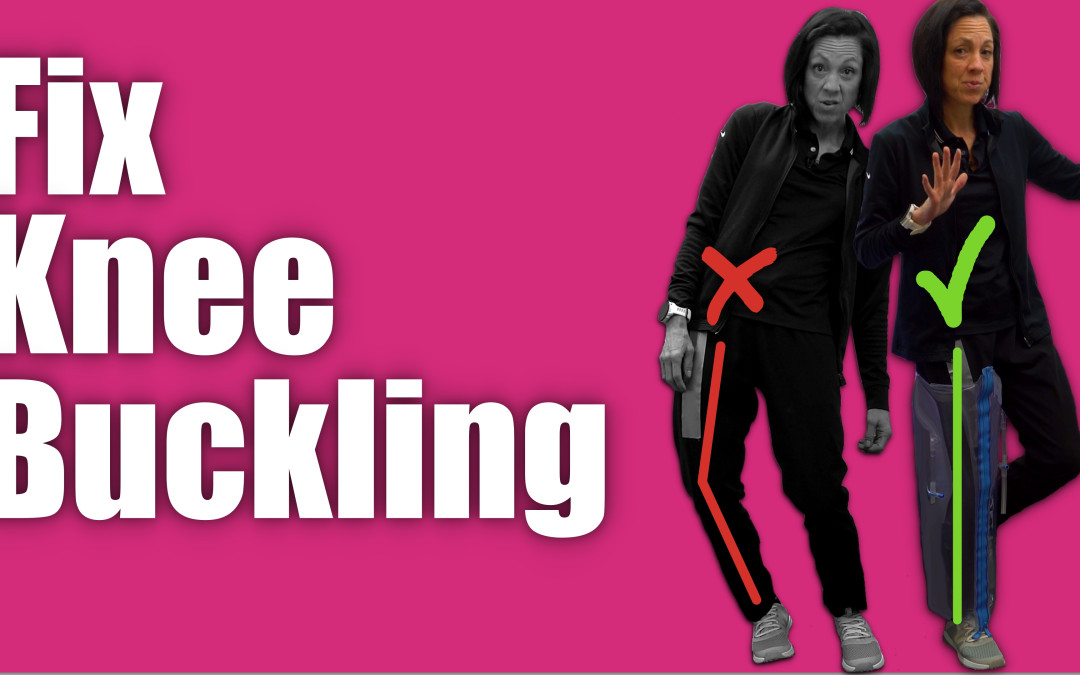
An air splint can help keep the leg more extended during supported standing activities while still allowing some movement. The even pressure around the leg also provides sensory input that can help increase awareness of where the affected leg is.
The goal is not to use the air splint as a permanent solution.
Instead, it can provide the support and sensory information needed to practice loading the leg more safely while working toward better control.
Start With Weight Shifting Before Stepping
If your affected leg buckles when you stand, jumping directly into walking practice may not address the underlying problem.
A more appropriate progression may begin with simply learning to load the affected leg without it giving way.
From there, the progression can include:
Weight shifting → heel lifting → forward stepping
You do not need to rush through these stages.
If the leg begins buckling during a more advanced movement, return to the previous level and continue building control.
The goal is not simply to walk farther.
The goal is to develop the ability to load the affected leg and have it respond appropriately.
Consistency Matters in Stroke Recovery
Rebuilding body awareness and movement control takes repetition and consistency.
If your affected leg feels “dead,” your next step may not be doing more strengthening exercises. It may be figuring out how to provide your brain with the right sensory information while gradually challenging the leg to participate.
And that can be difficult to figure out on your own.
Need More Direction Between Physical Therapy Sessions?
If you feel overwhelmed about what exercises to do, how to progress them, or what to work on between physical therapy sessions, Rehab HQ’s membership program is designed to give you more clarity and direction throughout your recovery.
You can learn more about the Rehab HQ membership and find out whether it is right for you at rehab-hq.com.
Articles you may be interested in

Stroke Rehabilitation Exercises: Why Specificity Matters for Better Walking
https://www.youtube.com/watch?v=rCRXccCHwIk Why Aren’t My Rehabilitation Exercises Improving My Walking? You show up. You do your exercises. You follow your routine. Yet walking still feels difficult, your foot catches on the floor, or you struggle to move your...

Doing Rehab Exercises Every Day but Not Improving? Your Program May Need a Reset
https://www.youtube.com/watch?v=08fvaKO6EKo Have you been doing your rehabilitation exercises every day but feel like you're no longer making progress? You may have a long list of exercises, yet your walking, foot clearance, or everyday mobility doesn't seem to...
Does Stroke Recovery Ever End? How to Improve Walking Years After a Stroke
https://www.youtube.com/watch?v=EkgoxFfroX4 If you have had a stroke, you may wonder how long recovery will take. Will you walk normally again? Is it still worth doing exercises years after your stroke? And how do you know when you have reached your full...

Why Pain and Nutrition Matter for Spasticity After Stroke
https://www.youtube.com/watch?v=_EdQGkOx4kw Have you ever woken up one morning feeling like your affected leg is moving a little more easily, only to find that the next day your ankle feels stiff, your foot wants to point downward, or your arm feels tighter...

Why Is Spasticity Worse Some Days? 3 Factors That Can Affect Spasticity After Stroke
https://www.youtube.com/watch?v=iBcU4c8kiqc If you live with spasticity after a stroke or other neurologic injury, you may have noticed something frustrating: Some days your muscles feel relatively loose and manageable. Other days, they seem much tighter. Your...

Spasticity Treatment After Stroke: Why Stretching Alone Isn’t Enough
https://www.youtube.com/watch?v=Vw8Y55f-sLY If you experience muscle stiffness, involuntary contractions, or difficulty moving your arm or leg after a stroke or neurologic injury, you've probably been told to stretch. But what if stretching alone isn't enough?...

Spasticity After Stroke: Why Your Muscles Feel Stiff
https://www.youtube.com/watch?v=mvDk3dMmc6E Muscle stiffness is one of the most common movement problems after a stroke or neurologic injury. Your arm may want to stay bent, your knee may feel stiff when walking, or your ankle and foot may constantly point...

Red Light Therapy After Stroke: Can It Help Support Brain Recovery?
https://www.youtube.com/watch?v=BFJzu1f2jEE Recovering after a stroke involves more than rebuilding strength or practicing movements. The brain itself is going through changes that can affect energy production, inflammation, blood flow, and its ability to form...

How to Improve Backward Stepping After a Stroke or Neurologic Injury
https://www.youtube.com/watch?v=FdYMY6Xj1fM Walking forward gets most of the attention in neurologic rehabilitation. But there is another movement that can have a major impact on your balance, confidence, and independence: Stepping backward. Think about how...

Stroke Recovery Treatments: How to Tell What May Actually Help
https://www.youtube.com/watch?v=nZWj2vVtDfw After a stroke or neurologic injury, it’s natural to look for anything that might improve recovery. Supplements. Devices. Electrical stimulation. New procedures. Hyperbaric oxygen therapy. Products promising to...


