If You Have Foot Drop After a Stroke, Should You Use Functional Electrical Stimulation?
If you’ve experienced a stroke, traumatic brain injury, spinal cord injury, or another neurologic condition, you’ve probably seen advertisements for devices like Bioness, WalkAide, or the Cionic Sleeve.
These devices promise to improve walking, reduce foot drop, and help restore movement.
But do they actually work?
While Functional Electrical Stimulation (FES) can be a helpful tool for some individuals recovering from neurologic injury, it is not a magic solution—and it may not be the right option for everyone.
Let’s break down what the research and clinical experience suggest.
What Is Functional Electrical Stimulation (FES)?
Functional Electrical Stimulation (FES) uses electrical impulses to activate specific muscles during functional activities such as walking.
Most commonly, FES is used to stimulate the muscles responsible for lifting the foot during the swing phase of gait.
This can help reduce:
- Foot drop
- Toe dragging
- Tripping
- Walking inefficiency
- Compensatory movement patterns
Unlike traditional electrical stimulation, FES is timed to occur during a specific movement, such as walking.
Neuromuscular Electrical Stimulation vs Functional Electrical Stimulation
Many people assume electrical stimulation works by directly activating weak muscles.
While that does occur to some degree, the primary mechanism is actually more complex.
Electrical stimulation activates sensory nerves, which send information to the brain and create a movement response.
This means the stimulation acts as a bottom-up intervention, providing input to the nervous system that may help facilitate movement.
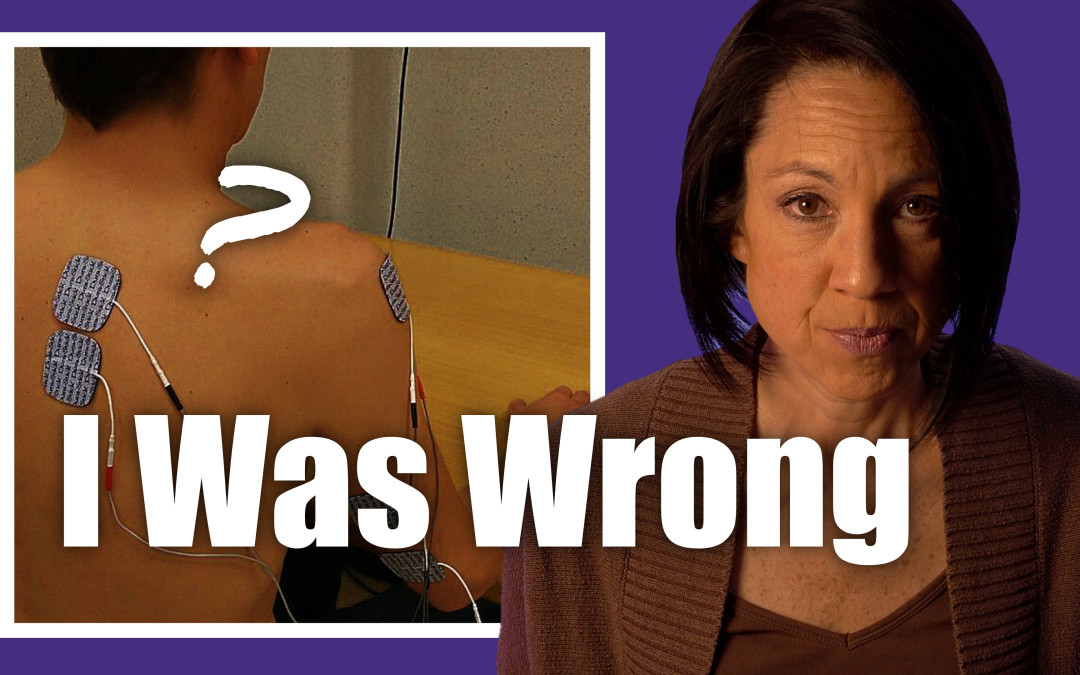
Neuromuscular Electrical Stimulation (NMES)
NMES is often used to:
- Activate muscles with little or no movement
- Improve awareness of a limb
- Address shoulder subluxation after stroke
- Help in very early stages of recovery
Functional Electrical Stimulation (FES)
FES adds a timing component.
The stimulation occurs only when it is needed during a functional activity, such as walking.
The goal is to assist movement while performing real-world tasks.
Does FES Improve Walking Permanently?
This is the most important question.
In many cases, people experience noticeable improvements while the device is on.
Common benefits include:
- Better foot clearance
- Reduced toe drag
- Improved walking efficiency
- Greater confidence
However, one of the biggest clinical concerns is whether those improvements remain when the device is removed.
For many individuals, improvements decrease significantly once the device is turned off.
This means FES should often be viewed as a tool, not the entire treatment plan.
Who Benefits Most From Electrical Stimulation After Stroke?
FES and NMES may be most beneficial for individuals who:
Early Recovery Stage
- Have minimal muscle activation
- Cannot voluntarily activate key muscles
- Need help increasing awareness of the affected limb
- Have shoulder subluxation
Less Effective for Some People in Later Recovery
Individuals further along in the motor learning process may not experience the same benefits.
In some cases, over-reliance on stimulation can become a barrier to developing more automatic, voluntary movement patterns.
This is why treatment should always be individualized.
The Real Goal: Automatic Movement
The ultimate goal of neurologic rehabilitation is not simply to move when a device is turned on.
The goal is to develop:
- Voluntary movement
- Automatic movement
- Improved coordination
- Better walking without conscious effort
When considering any recovery tool, ask:
Is this helping me move toward more independent and automatic movement?
That question is often more important than whether a device can temporarily improve movement.
FES can be a valuable tool—but it works best when combined with targeted therapy focused on motor learning, movement quality, and long-term recovery.
Need Help Deciding Which Recovery Tools Are Right for You?
At Rehab HQ, we help people recovering from stroke and neurologic injuries understand which interventions are most likely to improve walking, mobility, and independence.
Whether you’re considering electrical stimulation, struggling with foot drop, or trying to determine the next step in your recovery, our programs provide expert guidance based on clinical experience and motor learning principles.
Visit Rehab HQ to learn more.
Articles you may be interested in
Does Stroke Recovery Ever End? How to Improve Walking Years After a Stroke
https://www.youtube.com/watch?v=EkgoxFfroX4 If you have had a stroke, you may wonder how long recovery will take. Will you walk normally again? Is it still worth doing exercises years after your stroke? And how do you know when you have reached your full...

Why Pain and Nutrition Matter for Spasticity After Stroke
https://www.youtube.com/watch?v=_EdQGkOx4kw Have you ever woken up one morning feeling like your affected leg is moving a little more easily, only to find that the next day your ankle feels stiff, your foot wants to point downward, or your arm feels tighter...

Why Is Spasticity Worse Some Days? 3 Factors That Can Affect Spasticity After Stroke
https://www.youtube.com/watch?v=iBcU4c8kiqc If you live with spasticity after a stroke or other neurologic injury, you may have noticed something frustrating: Some days your muscles feel relatively loose and manageable. Other days, they seem much tighter. Your...

Spasticity Treatment After Stroke: Why Stretching Alone Isn’t Enough
https://www.youtube.com/watch?v=Vw8Y55f-sLY If you experience muscle stiffness, involuntary contractions, or difficulty moving your arm or leg after a stroke or neurologic injury, you've probably been told to stretch. But what if stretching alone isn't enough?...

Spasticity After Stroke: Why Your Muscles Feel Stiff
https://www.youtube.com/watch?v=mvDk3dMmc6E Muscle stiffness is one of the most common movement problems after a stroke or neurologic injury. Your arm may want to stay bent, your knee may feel stiff when walking, or your ankle and foot may constantly point...

Red Light Therapy After Stroke: Can It Help Support Brain Recovery?
https://www.youtube.com/watch?v=BFJzu1f2jEE Recovering after a stroke involves more than rebuilding strength or practicing movements. The brain itself is going through changes that can affect energy production, inflammation, blood flow, and its ability to form...

How to Improve Backward Stepping After a Stroke or Neurologic Injury
https://www.youtube.com/watch?v=FdYMY6Xj1fM Walking forward gets most of the attention in neurologic rehabilitation. But there is another movement that can have a major impact on your balance, confidence, and independence: Stepping backward. Think about how...

Stroke Recovery Treatments: How to Tell What May Actually Help
https://www.youtube.com/watch?v=nZWj2vVtDfw After a stroke or neurologic injury, it’s natural to look for anything that might improve recovery. Supplements. Devices. Electrical stimulation. New procedures. Hyperbaric oxygen therapy. Products promising to...

Finished Physical Therapy But Still Struggling to Walk? What to Do Next After Neurologic Injury
https://www.youtube.com/watch?v=WDf-dB2imTc Have you been told that you've met all of your physical therapy goals, but you still don't feel like you're moving normally? Maybe you can walk independently, but your walking still feels awkward or exhausting. Maybe...

Dead Leg After Stroke: Why Your Leg Won’t Move and How to Wake It Up
https://www.youtube.com/watch?v=cw7PIULok74 If your leg feels completely “dead” after a stroke—like you can think about moving it, try to move it, and nothing happens—you may be dealing with more than simple weakness. For some stroke survivors, the affected leg...


