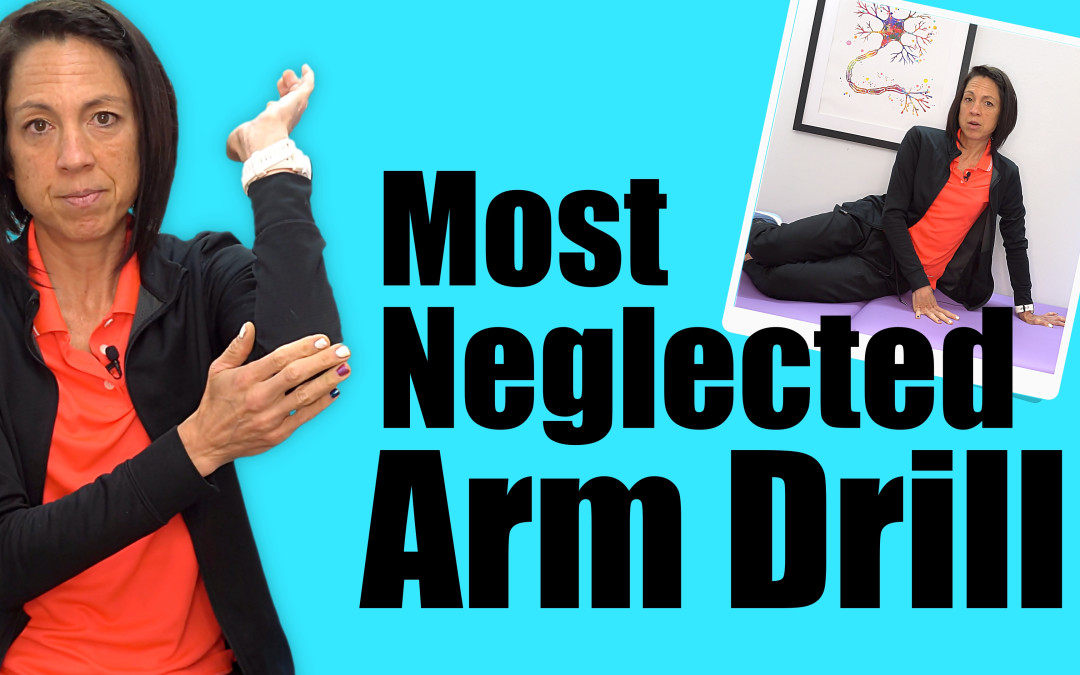
Have you ever wondered why your physical therapist spent so much time having you lean through your arm or support yourself on your elbow?
It may have seemed like a simple exercise, but arm weight bearing is one of the most important—and most overlooked—foundations of arm recovery after a stroke or other neurologic injury.
Many people spend months trying to strengthen their arm or practice reaching exercises without first addressing the underlying issues that make movement difficult. When your brain and shoulder don’t have a stable foundation, even the best exercises can become frustrating.
That’s why arm weight-bearing exercises remain an important part of recovery, whether you’re just beginning rehabilitation or continuing to improve years after your injury.
What Is Arm Weight Bearing?
Arm weight bearing simply means placing part of your body weight through your affected arm.
Depending on your level of recovery, this may include:
- Supporting yourself on your forearm
- Leaning through your elbow while sitting or lying on your side
- Weight bearing through an extended arm
- Using your arm to support your body during functional movements
The beauty of weight-bearing exercises is that they can be adapted for nearly every stage of recovery. Whether you’re just beginning to regain movement or working toward higher-level activities, they provide valuable input to both your muscles and nervous system.
Why Is Arm Weight Bearing So Important After a Stroke?
Many people think weight bearing is simply a strengthening exercise.
In reality, it helps restore the connection between your brain and your arm while improving the stability and control needed for functional movement.
Instead of focusing only on moving the arm, weight bearing helps create the foundation that makes movement possible.
The 4 Major Problems That Slow Arm Recovery After a Stroke
One reason arm weight-bearing exercises are so valuable is that they target several common challenges that occur after a neurologic injury.
1. Loss of Sensation and Arm Awareness
Many people describe their affected arm as feeling “disconnected” or difficult to locate without looking at it.
Weight bearing provides important sensory input that helps your brain recognise where your arm is in space, improving body awareness and preparing the nervous system for movement.
2. Poor Shoulder Stability
Your shoulder depends on several muscles working together to keep the joint stable while you move.
After a stroke or brain injury, this coordination is often disrupted, making reaching, lifting, and daily activities more difficult.
Weight-bearing exercises help activate these stabilising muscles and create a stronger base for arm movement.
3. Abnormal Movement Patterns
Do you notice your shoulder, elbow, and hand all moving together instead of independently?
These abnormal movement patterns—often called movement synergies—are common after neurologic injury.
Weight bearing places the arm in supported positions that encourage more controlled, coordinated movement.
4. Difficulty Using the Arm in Different Positions
Many people can move their arm while lying on their back but lose that movement when sitting or standing.
Weight-bearing exercises help bridge that gap by supporting the arm while your brain learns to control movement against gravity.
Why Your Therapist Started with Weight-Bearing Exercises
If your physical therapist introduced weight-bearing exercises early in your rehabilitation, there was a good reason.
These aren’t simply “beginner” exercises—they’re foundational exercises.
As recovery progresses, the amount of weight, body position, and complexity of the activity may change, but the neurological benefits remain the same.
Many people stop practicing weight bearing once they regain some movement, when in fact it often continues to play an important role throughout recovery.
Recovery Is About More Than Repetition
It’s common to receive a list of exercises during physical therapy without fully understanding why you’re doing them.
But understanding the purpose behind an exercise can completely change how you approach your recovery.
When you know what problem an exercise is solving, you’re better able to practice with intention, recognise your progress, and make smarter decisions as your recovery continues.
Learn How to Use Weight Bearing the Right Way
While weight bearing is an important part of recovery, the position of your arm, how much weight you place through it, and when you progress each exercise all influence your results.
Learning how to choose the right exercises for your stage of recovery can make all the difference.
Inside Rehab HQ Gold Membership, you’ll learn how to break down movements, understand why specific exercises work, and build a structured recovery plan with expert guidance. You’ll also gain access to an extensive exercise library, educational resources, and live support designed to help you take ownership of your recovery.
If you’re ready to move beyond simply doing exercises and start understanding how to recover more effectively, explore everything Rehab HQ Gold Membership has to offer.
Continue Your Recovery Journey
Recovery doesn’t happen by accident—it happens through consistent practice, education, and understanding how your brain learns movement.
Arm weight bearing is one of the most effective ways to build that foundation.
Whether you’re early in recovery or working toward higher-level arm function, giving your brain the right input today can help improve the movement you rely on tomorrow.
Looking for step-by-step guidance? Explore Rehab HQ Gold Membership to learn how to safely progress your exercises, improve arm function, and continue building confidence throughout your recovery.
Articles you may be interested in

Plyometric Exercises After Neurologic Injury: A Progression for Returning to Running
https://www.youtube.com/watch?v=Y9VQIUpnDEQ If you’ve had a neurologic injury and your goal is to eventually return to running, rebuilding strength and balance is only part of the process. Running also requires your muscles to produce quick, coordinated...

How to Choose the Right Arm Weight Bearing Exercise After Stroke
https://www.youtube.com/watch?v=rmcNzuq3GeY Not All Weight-Bearing Exercises Are the Same If you've been told to practice arm weight-bearing exercises after a stroke or neurologic injury, you may be asking: "Which exercise should I be doing?" The answer is...

3 Overlooked Stroke Recovery Exercises That Can Improve Mobility and Walking
https://www.youtube.com/watch?v=LltecnPKyBg 3 Overlooked Stroke Recovery Exercises That Can Improve Mobility and Walking If you've had a stroke or another neurologic injury, you've probably spent hours practicing walking, standing, and strengthening...

The Best Protein for Stroke Recovery: How Nutrition Can Support Brain Healing After a Neurologic Injury
https://www.youtube.com/watch?v=4KUV21yFRTM The Best Protein for Stroke Recovery: Why It Matters More Than You Think Recovering from a stroke or other neurologic injury isn't just about doing more exercises. Your brain is working every day to repair...

Stroke Recovery Goals: Why You May Have “Graduated” Physical Therapy But Still Don’t Move Normally
https://www.youtube.com/watch?v=si--VF1yBhc&t Have you ever been told you've met all of your physical therapy goals, yet you still don't feel like you're moving the way you want to? Maybe your leg swings out to the side when you walk. Perhaps your foot...

How to Get Up From a Squat After Stroke, Foot Drop, or a Neurologic Injury
https://www.youtube.com/watch?v=rxXxtLPA0Bc If you've ever avoided picking something up from the floor because you weren't sure you could stand back up, you're not alone. For many people living with stroke, Parkinson's disease, multiple sclerosis, spinal...

Does Functional Electrical Stimulation (FES) Really Help Foot Drop After Stroke or Neurologic Injury?
https://www.youtube.com/watch?v=LX0v6xTlkRU If You Have Foot Drop After a Stroke, Should You Use Functional Electrical Stimulation? If you've experienced a stroke, traumatic brain injury, spinal cord injury, or another neurologic condition, you've probably seen...

How Many Repetitions Should You Do After a Stroke? The Answer May Surprise You
https://www.youtube.com/watch?v=CaqMujGMXTI One of the most common questions people ask during recovery is: "How many reps should I do?" It's a reasonable question. In traditional fitness, repetition counts are a cornerstone of progress. But when your goal is...

How to Improve Walking After Stroke: The Missing Link Most People Overlook
https://www.youtube.com/watch?v=bCbsX8iQu_Y&t=636s If you struggle with foot drop, ankle weakness, poor balance, or an uneven walking pattern after a stroke or neurologic injury, there's a good chance you're spending significantly less time standing on your...

Why Does My Leg Feel Heavy When Walking After Stroke or Neurologic Injury?
https://www.youtube.com/watch?v=16IRptA5UWg Many people recovering from a stroke, traumatic brain injury, spinal cord injury, or other neurologic condition become frustrated when their leg starts to feel heavier or stiffer—even while making progress. You...


