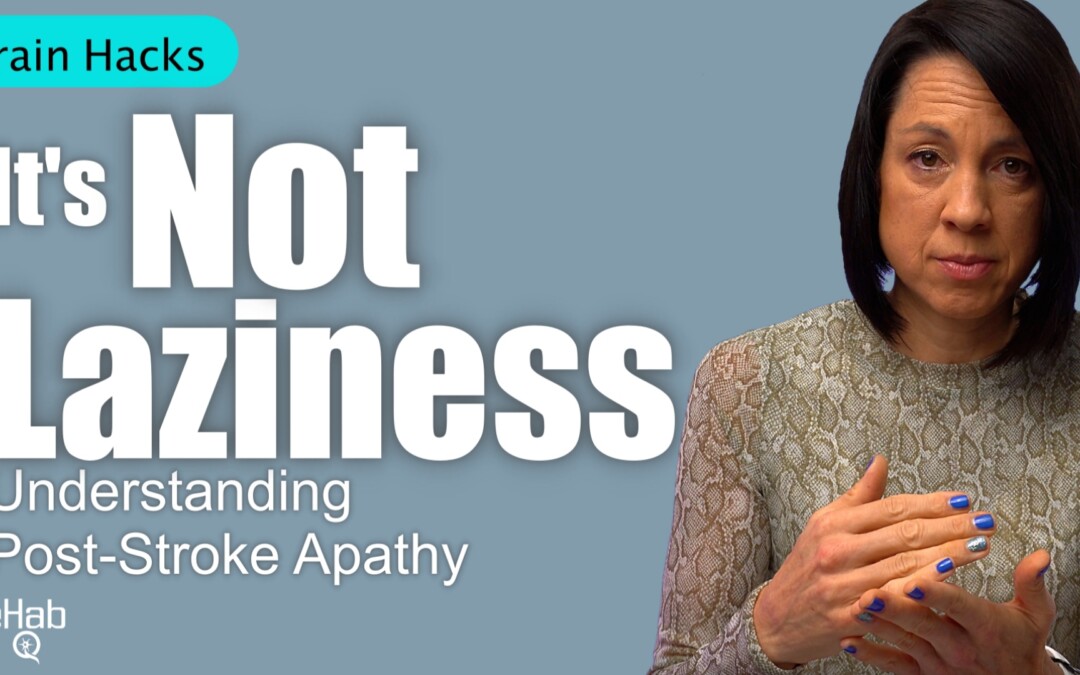
What’s Really Going On When Motivation Disappears After Stroke
Recovering from a stroke is a journey that requires strength, patience, and persistence. But for many stroke survivors, the hardest part isn’t weakness, fatigue, or memory loss. It’s something less visible yet deeply impactful: apathy.
If you’ve noticed that you or your loved one has lost motivation, seems disconnected from recovery, or struggles to start activities even when they want to, it could be post-stroke apathy. This condition is far more common than most people realize, yet it often goes undiagnosed and untreated.
Recovering from a stroke is a journey that requires strength, patience, and persistence. But for many stroke survivors, the hardest part isn’t weakness, fatigue, or memory loss, it’s something less visible yet deeply impactful: apathy.
If you’ve noticed that you or your loved one has lost motivation, seems disconnected from recovery, or struggles to start activities even when they want to, it could be post-stroke apathy. This condition is far more common than most people realize, yet it often goes undiagnosed and untreated.
What Is Post-Stroke Apathy?
Post-stroke apathy is a neurological condition characterized by a lack of motivation or drive to act. It’s not the same as being lazy, unmotivated, or disinterested, it’s a symptom of changes in the brain caused by the stroke itself.
A person with apathy may understand what needs to be done and even want to participate, but they find it extremely difficult to initiate action. For caregivers and family members, this can be confusing and frustrating. It’s important to remember that this isn’t a choice or a personality change. It’s a direct result of brain injury.
What the Research Says
Research suggests that approximately one in three stroke survivors experiences some degree of apathy during recovery. While studies have shown mixed findings on whether apathy is more common after right or left hemisphere strokes, clinical experience points strongly toward those with right hemisphere involvement.
Unfortunately, individuals who experience apathy tend to have poorer long-term outcomes, not because they are less capable of recovery, but because apathy is rarely identified or addressed in therapy. When the drive to act is gone, rehabilitation participation naturally decreases, and without intervention, this can stall progress.
Why Post-Stroke Apathy Happens
Apathy develops when certain regions of the brain responsible for motivation, initiation, and emotional drive are affected by the stroke. These include the frontal lobe, basal ganglia & internal capsule, thalamus, and white matter pathways.
The frontal lobe is responsible for initiation and goal-directed behavior, while the basal ganglia and internal capsule help regulate dopamine. This is a neurotransmitter that fuels our “drive”. The thalamus acts as a relay center between thinking and emotion, and damage here can disrupt the connection between intention and emotional engagement.
White matter changes, often caused by small or repeated strokes, can gradually diminish the brain’s ability to initiate actions. These subtle changes are sometimes misdiagnosed as depression, especially when motivation decreases slowly over time.
The Challenge of Recognition
Apathy is frequently mistaken for depression, but the two are distinct conditions. Depression involves sadness, hopelessness, or emotional pain, whereas apathy is marked by emotional flatness and a lack of drive. A person with apathy may not feel sad. They simply struggle to begin or sustain activity.
One of the reasons post-stroke apathy is often overlooked is anosognosia, a condition where individuals are unaware of their own limitations. This can make it difficult for them to recognize that they need help or to understand the extent of their condition.
Because of this, caregivers play an essential role in noticing changes and communicating them to healthcare professionals. From there, the clinician’s task is to differentiate between depression and apathy to ensure the right interventions are provided.
Signs of Post-Stroke Apathy
You might notice:
- Needing constant reminders to start tasks
- Acting only when told
- Feeling emotionally “flat”
- Losing interest halfway through activities
- Saying “I know I should” but never starting
If these behaviors last more than a few weeks, it might be time to talk to your healthcare provider.
What Helps Rebuild Motivation
The good news? Apathy can improve with the right strategies. The brain can relearn how to initiate and engage, but it takes structure, consistency, and patience.
1. Use a Timer
Start small. Set a 20-minute timer for your therapy or task. Knowing there’s a clear start and end makes it less overwhelming and helps your brain “activate.”
2. Keep a Daily Checklist
Write down 3 simple tasks each morning, like “stretch for 5 minutes” or “walk to the mailbox.”
Checking things off gives your brain a dopamine boost and helps rebuild drive.
3. Keep Things Simple
Focus on one therapy activity per day and be consistent. After a month, you can gradually add another activity. Small, steady progress helps the brain re-engage without feeling overwhelmed.
4. Focus on the Basics
Sleep, nutrition, mindfulness, and gentle movement all improve attention and energy. Think of them as the foundation for rebuilding motivation.
5. Caregivers: Keep Prompts Simple
If you’re supporting someone with apathy, be patient. Give clear, calm prompts and avoid nagging, it’s not that they don’t care, their brain just needs more cues to act.
6. Emerging Approaches
-
Repetitive Transcranial Magnetic Stimulation (rTMS): Early research shows promise in enhancing motivation by targeting neural pathways.
-
Dopaminergic medications: Can be beneficial under medical supervision,. Stimulants such as amphetamines are generally not recommended after stroke.
Final Thoughts
Post-stroke apathy is not a sign of laziness. It’s a neurological condition that deserves understanding and proper care. Recognizing it early, involving caregivers, and working with professionals who understand its root causes can greatly improve recovery outcomes.
If you or a loved one is struggling with motivation after a stroke, know that it’s not about willpower, it’s about healing. The more we understand how the brain works, the better we can support its remarkable ability to recover.
So, if motivation feels hard right now, don’t wait for it to return, start anyway, even for one minute. Action itself can reawaken drive and help your brain heal.
And if you’d like help building a plan that actually works for your recovery, join us at Rehab HQ. We’ll help you create realistic routines, track your progress, and reconnect with your motivation step by step.
👉 Click here to explore our recovery plans or learn more about one-on-one coaching with Tara.
Articles you may be interested in

Stroke Rehabilitation Exercises: Why Specificity Matters for Better Walking
https://www.youtube.com/watch?v=rCRXccCHwIk Why Aren’t My Rehabilitation Exercises Improving My Walking? You show up. You do your exercises. You follow your routine. Yet walking still feels difficult, your foot catches on the floor, or you struggle to move your...

Doing Rehab Exercises Every Day but Not Improving? Your Program May Need a Reset
https://www.youtube.com/watch?v=08fvaKO6EKo Have you been doing your rehabilitation exercises every day but feel like you're no longer making progress? You may have a long list of exercises, yet your walking, foot clearance, or everyday mobility doesn't seem to...
Does Stroke Recovery Ever End? How to Improve Walking Years After a Stroke
https://www.youtube.com/watch?v=EkgoxFfroX4 If you have had a stroke, you may wonder how long recovery will take. Will you walk normally again? Is it still worth doing exercises years after your stroke? And how do you know when you have reached your full...

Why Pain and Nutrition Matter for Spasticity After Stroke
https://www.youtube.com/watch?v=_EdQGkOx4kw Have you ever woken up one morning feeling like your affected leg is moving a little more easily, only to find that the next day your ankle feels stiff, your foot wants to point downward, or your arm feels tighter...

Why Is Spasticity Worse Some Days? 3 Factors That Can Affect Spasticity After Stroke
https://www.youtube.com/watch?v=iBcU4c8kiqc If you live with spasticity after a stroke or other neurologic injury, you may have noticed something frustrating: Some days your muscles feel relatively loose and manageable. Other days, they seem much tighter. Your...

Spasticity Treatment After Stroke: Why Stretching Alone Isn’t Enough
https://www.youtube.com/watch?v=Vw8Y55f-sLY If you experience muscle stiffness, involuntary contractions, or difficulty moving your arm or leg after a stroke or neurologic injury, you've probably been told to stretch. But what if stretching alone isn't enough?...

Spasticity After Stroke: Why Your Muscles Feel Stiff
https://www.youtube.com/watch?v=mvDk3dMmc6E Muscle stiffness is one of the most common movement problems after a stroke or neurologic injury. Your arm may want to stay bent, your knee may feel stiff when walking, or your ankle and foot may constantly point...

Red Light Therapy After Stroke: Can It Help Support Brain Recovery?
https://www.youtube.com/watch?v=BFJzu1f2jEE Recovering after a stroke involves more than rebuilding strength or practicing movements. The brain itself is going through changes that can affect energy production, inflammation, blood flow, and its ability to form...

How to Improve Backward Stepping After a Stroke or Neurologic Injury
https://www.youtube.com/watch?v=FdYMY6Xj1fM Walking forward gets most of the attention in neurologic rehabilitation. But there is another movement that can have a major impact on your balance, confidence, and independence: Stepping backward. Think about how...

Stroke Recovery Treatments: How to Tell What May Actually Help
https://www.youtube.com/watch?v=nZWj2vVtDfw After a stroke or neurologic injury, it’s natural to look for anything that might improve recovery. Supplements. Devices. Electrical stimulation. New procedures. Hyperbaric oxygen therapy. Products promising to...


